Wednesday, October 26, 2011

Conflict and Confrontation: How Do You React?

Meeting the Bear Face to Face

In workshops, I have an engaging (well, people do seem to enjoy it) story about what to do when you come face to face with a bear. I use meeting bears as a metaphor for encountering conflict.

I ask the class participants for a show of hands: Are you supposed to curl up in a fetal position and play dead? Do you spray them with bear repellant? Do you run? Do you shoot or throw rocks? Do you walk in the woods with bear bells, hoping the sound will scare any bears away? Each of these behaviors can be compared to how we deal with conflict.

For example, do we avoid it and pretend it’s not there (fetal position)? Do we verbally “spray” the other person with our anger? Do we get out of the way? Do we go on attack? Or my favorite: I would like to just walk through life with my bear bells, hoping conflict will avoid me.

When I lived in Alaska, I went to a seminar presented by Fish and Wildlife troopers to tell me how to live with bears. I lived on a dead end dirt road in the boonies, where hunters would park their beat-up trucks and go into the woods to hunt for deer and bear. I’m sure I was the only house in Alaska without a gun.

What I learned was that with black bears, you are supposed to raise your arms up high and look as big as you can. That way, the bear will acknowledge you as the bigger bear, and leave you alone.

While hiking the Summerland trail, I came face to face with a black bear. My sweetie and I like this trail, and you may have read another story I wrote mentioning it. We usually see marmots on this hike, and one year we saw mountain goats. We were about ½ hour into the 9 mile trail when we came around a slight curve and Bart said “Oh wow”, rather quietly. I looked up and lumbering toward us on the trail was a medium sized black bear. While we stopped, the bear just kept on walking straight for us.

That was a little disconcerting. We stepped to the side of the trail behind a fallen tree, which protected us to right above our knees. While Bart rummaged in his backpack for his whistle, I momentarily felt at a loss as to what to do. After the initial surge of fear when I realized the bear wasn’t going to leave the trail for us, I just felt helpless.

I moved my arms in a sweeping motion. “Go on. Go on, now. Shoo.“ I tried to convey to the bear that it should move off the trail. The bear continued mellowly walking toward us for a few steps, then as it closed in on us at about 30 feet, veered off the trail and started walking into the woods toward Frying Pan Creek. Just then Bart found his whistle and blew it, a weak, shrill sound that didn’t even reach a marmot cry. The bear didn’t react, just continued on it’s way down the slope.

Whew! We recovered and continued on our hike. Ten minutes later, I said, “Hey, we were supposed to raise our arms above our heads so we looked really big to the bear.”

How many times had I relayed that tidbit of information to a roomful of workshop participants? Do you think I remembered my own advice when the time actually came to use it?

Forgetting good advice often flies out of our heads in the heat of an encounter. Under stress, we react, and revert to natural behaviors, not learned ones. Unless we have trained ourselves to behave in a certain way, we are likely to fall back on old behaviors that may or may not be the best way to handle a situation.

A study of the four behavior styles reveals how people will likely react when their hot buttons are pushed. As their behaviors align with their dominant styles, people can be pretty predictable.

Controllers (also known as D’s, Reds, and Drivers, depending on the behavior style system consulted) are likely to take over, dictate, suppress their emotions, blame and/or explode. Controllers are not afraid of conflict, in fact they are often the source of it. They will ask tough questions and make assertive statements with the goal of spurring action and getting results – not of actually causing conflict. However, for the other three styles, this often feels like provoking conflict or confrontation.

Persuaders (also known as I’s, Yellows, or Expressives) tend toward verbal attacks which may take the form of sarcasm and barbs, especially in the office where yelling is frowned upon. They also have a tendency to react emotionally and may cry, talk about the situation excessively, dump it on someone else, and then, may forget about it.

When Stabilizers (aka S’s, Greens and Amiables) are under a lot of tension, they will likely give in (and may later “get even”), avoid the situation or person, worry, wait too long to act, and tell others. They would prefer to avoid conflict and being relationship-oriented will have a very difficult time confronting the other about the stress they are experiencing.

When Analyzers (or C’s, Blues, and Analyticals) face conflict, they are more likely to withdraw – physically if possible. If they can’t leave the room, they will withdraw emotionally and verbally. They also tend to nitpick and try to prove they are “right”.

Essentially, two of these styles are more of the “fight” orientation (Persuaders and Controllers go on verbal attack or take over). And the other two styles tend more toward “flight”: Analyzers will withdraw and Stabilizers will avoid conflict and/or acquiesce. However, when pushed past their limits, each style will end up doing the opposite of what is their natural behavior. For example, if you see a Controller acquiescing, a Persuader withdrawing, a Stabilizer exploding, or an Analyzer going on verbal attack and getting over-emotional, you know they are out of control. These extreme behaviors mean it’s way past time to deal with the conflict in a constructive manner.

Although we all have elements of all four behavior styles, one is usually dominant. If you learn to identify others’ styles (and your own) you will gain a tremendous amount of insight into why they act the way they do and how to effectively communicate with them to create win-win situations and prevent unneeded stress and tension. Conflict is okay, in fact it is often a good thing, as long as everyone knows how to play fair.


If you’d like to learn more about how to deal with difficult situations and people, contact me for information on a workshop or coaching session. Understanding behavior styles is essential for creating positive influence and effective communication. It’s one of the most powerful tool’s in a manager’s toolbox.

And now when I tell my workshop stories, I can add one more metaphor for dealing with conflict: Shoo it away.

A baby black bear grazes the supermarket produce section in Ketchikan, Alaska, where I first learned how to live with bears.


Thursday, October 20, 2011

Occupy Wall Street: The "Leaderless" Movement on the Leading Edge

The Occupy Wall Street movement is against greed and corruption. But what are they for? What is their vision?

I’d like to think they are for re-instating the true essence of the American Dream.

The American Dream is played out a little differently if you are a recent immigrant or home-grown, but at it’s core it is about ensuring equal opportunity for everyone. Having friends in high places in order to get ahead  is not supposed to be what the US is all about. Americans are supposed to have equal opportunity to start one’s own business, to get an education, to find a job, and yes, even for health care. Citizens insisted that they had an equal opportunity to own their own homes, which unfortunately our financial and real estate systems tried to support (although primarily from a greedy motivation not a patriotic one) to everyone’s detriment.

We don’t truly yet have equal opportunity, of course, but that is what all our laws and regulations over the past decades have striven toward. And having lived and travelled internationally, we do have equal opportunity far more than most countries.

But has equal opportunity turned into the American Pipe Dream?

The “white man’s sickness” of needing to have more and more has eroded the American Dream. Perhaps this culmination was inevitable. We watched from the outside as Washington power-brokers rewarded each other for their favors with contracts, tax cuts, and donations. Huge corporations got huger, and politicians and CEOs got explosively richer.

But as long as we were able to live in relative abundance with our computers, fancy phones and other gadgets, we let it slide. Most of us were pretty happy with our level of comfort and managed to turn a blind eye to the growing population of homeless and poor.

But now we feel the pain too. We have cut back, slid back, and spun our wheels trying to stay in place to no avail. Yet the barbs keep coming to remind us that there is a huge gap between the average American and that one percent. CEO pay is one of the most obvious:

• Since the 1970’s median pay for executives at the largest US companies have quadrupled, even adjusting for inflation. Over the same period, average pay for a non-supervisory worker dropped more than 10 percent, according to the Bureau of Labor Statistics.

• CEOs at 299 US companies had combined compensation of $3.4 billion in 2010, enough to pay 102,325 workers, according to the AFL-CIO's Executive Paywatch. Average pay per CEO was $11.4 million.

• According to an October 10th, 2011 fact-checking article on Politifact, the latest CEO-to-worker pay ratio in the U.S. is “185 to 1 in one study and 325 to 1 in another -- and those numbers were not generated by groups that might have an ideological interest in downplaying the gaps between rich and poor.”

• The average American large-company CEO makes 225% more than the average large-company CEO in the other 13 largest industrial countries. According to Lawrence Mishel's study "The State of Working America 2005, 2006" from the Economic Policy Institute.

There is no doubt that compensation for large company executives is so out of whack that it can lead to poor employee morale and an increasing ‘us against them’ mentality. That type of thinking leads to employees cutting corners and not engaging in such a way that creativity and growth suffer. It’s just poor business strategy in the long run.

And now, the relentless economic struggle has resulted in the Occupy Wall Street movement. This movement is said to be leaderless but seems to me to be filled with leaders. They are the leaders of all of us complacent disgruntled Americans who have done nothing but complain and become dismayed and depressed at our lack of forward momentum. They are on the leading edge of those who want to take back the American Dream and refresh it with a more collaborative, honest and egalitarian commitment. And they want to see that commitment to refreshment and change from the current establishment powers-that-be.

We - "the 99%" - may have the education and the initiative, but the opportunities are lacking. Most of us don’t have the connections that 31-year-old Chelsea Clinton has, who was recently offered a $300,000 per year Board position with IAC. The playing field is not level and never has been. But it has gotten so enormously steep in the past couple of decades that we are exhausted trying to maintain our footing.

Things have got to change and the leaders of the change are out there camping in the streets. These leaders are redefining leadership as we are used to viewing it. How are they articulating their vision? Are we on board yet? If so, why? If not, why not? Does it have anything to do with their leadership style? What results are they getting? What relationships are they building?

Is Occupy Wall Street a revolution in leadership as much as a movement against greed and corruption? I, for one, am going to pay attention and find out.
Or is it just a movement of bums?  (Warning:  foul language!)

Wednesday, October 12, 2011

Boss's Day Sentiments


Have you ever heard or uttered those words before? Chances are you haven’t. I have never been in an office where the day was observed, although I am sure there is some happy outpost where the employees are honoring their boss on that day.

Eighty-five percent of employees like their boss and think they are doing a pretty good job. If you think your boss is in that 85% too, why don’t you take a moment to let them know you appreciate them? A little honest appreciation, as you know with your own employees, can go a long way.

I know many of you don’t feel comfortable giving cards or writing sloppy sentiments to anyone, much less your boss. That’s why I have come up with some snappy messages that you can add to a card or note. I suggest you forego the electronic message for something a little more time-tested and traditional. Paper, whether a fancy greeting card, a blank notecard, or even just a sheet swiped from the printer, makes a stronger impression than a virtual message, no matter how many sounds and colors are attached. How quaint, I know, but usually true.

For your greeting-card ease, check these out:

The Haiku

Haikus traditionally reference nature. They are a good choice if you work in international business or your boss appreciates poetry, the outdoors, or sushi. It’s pretty easy to create a poem with the 5 syllables – 7 syllables – 5 syllables formula. Here are three examples:

In stormy work times
Your equanimity is
An island of calm.

Your guiding presence
And encouraging support:
Like sun in winter.

“Awesome job!” you say
And I work harder for you.
I return the praise.

Try it out yourself, it's not hard.

The Limerick

Limericks are a little trickier to write than haiku. The limerick is often a little bawdy and may not be the best choice for your boss unless you have a very good relationship with them, they love jokes, and you can keep it clean. Here is the formula to write a limerick: Lines 1, 2, and 5 of limericks have seven to ten syllables and rhyme with one another. Lines 3 and 4 of limericks have five to seven syllables and also rhyme with each other. I may have fudged a bit on some of that below:

There once was a boss from Intel
Who implored her staff, “Sell, sell, sell!”
Her staff did her bidding
The boss did no ridding
And all stayed together in hell.

Oh, oops, maybe that wasn’t quite right for Boss’s Day, and anyway that was too specific for general use. How about another?

There once was a generous boss
Whose staff was prepared for loss
When layoffs came round
New money was found
So the boss did not have to toss.

Or:
Our boss is an exceptional guy
He knows how to tie a tie
And when he walks in
Respect replaces the din
On him we can rely.

And:
There is an amazing man
Who leads a misfit clan
With patience and care
Smarts, humor and flair
With him, succeed we can!

A little Yoda-speak there on the last one, but you get the idea.

Perhaps that’s enough “poetry”, if you can call it that. But using a standard poetry vehicle lifts the seriousness and eases any discomfort about telling people how we feel, while still conveying appreciation.Once again, I encourage you to give it a try.

But sometimes you just want to say something simply. All kidding aside, you really want to let them know you appreciate what they do (at least most of the time, right?) The most straightforward and probably most appreciated note would say something like one or a combination of the following:

I am lucky to have you for a boss. (Why? Give a specific example like “no one else has ever taken their role as a coach so seriously” or “I have experienced more success working for you than anyone else.”)

You have a knack for …(managing our diverse team, simplifying the confusing, inspiring our efforts, handling difficult situations, etc….) and I am learning from you.

Thank you for your support and encouragement. (and then give a specific example of when they encouraged or supported you or say something like “There are so many instances where your encouraging words were just what I needed.”)

I appreciate your … (fill in the word: patience, persistence, creativity, resourcefulness, sense of humor, appreciation…)

You get the idea. I know finding the right words can be difficult sometimes so I hope these examples will help you express your gratitude. So don’t forget - October 16th is Boss’s Day. Since it’s a Sunday, you may want to celebrate this Friday, or at the least Monday. But really, any time is a fine time to convey appreciation.


A simple note could have prevented this public appreciation fiasco!

If you can't see the 1.48 minute Parks and Recreation video, here is the URL:
http://www.hulu.com/watch/132399/parks-and-recreation-award-ceremony

Wednesday, September 28, 2011

Do Leaders Need to Use Social Media?

What is a leader today?

I was listening to a teleclass from Linda Bernardi from the Bernardi Leadership Institute and she said the word “leader” should be changed to “collaborative influencer.” The word leader, she said, brings up old experiences with authoritarian types, and that’s not what a leader should be today.

Leaders today, she emphasized, need to be able to engage their constituents in a cooperative manner with the intent to create an awesome customer experience together. A leader today needs to take advantage of the two-way conversations and transparency that social media channels provide. In this case, they need to be able to effectively text and blog, Facebook and Twitter, and do whatever it takes to interact honestly with their constituents: customers, employees, investors, lenders, vendors.

I don’t think a two-syllable word is going to be replaced by a nine-syllable one, but I understand what she is saying. There is a shift going on. Leaders are being forced, due to the internet and it’s social media channels, to be more transparent. If they want their company to be taken seriously by their customers and themselves to be respected by their employees, then they need to know how to engage with them on their terms.

Many of my clients eschew these modern avenues of communication. They say they don’t have the time, are not interested, and/or don’t like the lack of privacy. However, social media is not going away. It is getting bigger. They need to know that to be an effective leader today, they need to be able to carry on relevant conversations that show their knowledge of their topic, and their interest in their constituents.

A leader today needs to be a collaborative influencer both face to face and virtually. These skills are essential . The very definition of a leader is one who influences. And others won’t allow themselves to be influenced – or can’t – if communication is not in the form they use and expect.

Does your CEO use social media effectively – to influence collaboratively? Do you? How important do you think it is for your organization’s leaders to be able to use social media effectively in order to build trust, respect and business?

Are you a “collaborative influencer”?

Wednesday, September 14, 2011

How Layoffs Reveal Your Leadership Qualities

I just received an email with the subject line ‘Checklist for Terminating an Employee’. It turned out to be an advertisement for a book called From Hello to Goodbye. For some reason, although the book is about the entire work span of an employee, the only chapter that was mentioned in the message was the one on how to “terminate the employment relationship”.

This how-to chapter was the sole selling point for the entire book. The email came from the Society for Human Resource Management, so it is intended for HR professionals.

Although I’ve never been “fired” per se (although one insensitive career counselor moved a colleague to tears when she told our group of newly separated workers that being laid off was the same thing as being fired), I have been laid off several times and each time the process was handled very differently. No matter how Human Resources, legal departments or senior management define the termination process, the ultimate responsibility for how the separation is actually handled rests with the worker’s manager.

The coldest, most impersonal layoff I experienced was probably done according to the above-mentioned Checklist. My boss had been distant for some time. When he called me into his office where another manager was sitting, I immediately knew this was it. It offended me that he felt he had to have a witness. Without any emotion, he said he’d decided to outsource my position, explained my severance package, and asked that I pack my things and leave that afternoon. This was the least sensitive layoff I’d experienced, and the one done most “by the book”. My boss was Vice-President of Human Resources.

The most humane termination experience I had was the time my boss defied the HR rules. My supervisor rounded up our team of four and said, “I’m not supposed to tell you this, and you can’t tell anyone else. But lay-offs are going to happen next week and all of you are among them.” She then took us out to lunch and gave us the rest of the day off to “go sign up at the unemployment office”. It was a Friday and on Tuesday of the next week, dozens of people were called into a large room and told en masse that their jobs were eliminated. Stunned co-workers wandered the halls, but gratefully, we weren’t among them.

In the second example, some will say my boss acted rashly and laid the company open to possible lawsuits by doing what she did. But my opinion was she was a very smart leader. First, she knew us well and knew that getting laid off would be a hardship for us. She wanted to give us the news in as helpful and human a way as possible. She showed empathy and concern.

Second, studies have shown that ensuring the dignity of terminated workers goes a long way toward heading off lawsuits. One study of displaced employees found that 15 percent of workers who felt their severance experience lacked dignity or respect had filed wrongful termination lawsuits.

Honesty, sensitivity and caring for an individual help mitigate the devastation of layoffs. As a leader, you must take care to make clear, fair and informed choices about which employees to let go and which to keep. By being transparent about how the decisions are made, and making an effort to over-communicate the what, why, and how of the layoffs, you are showing your employees respect.

One study reported that losing one’s job created more stress than a divorce. It doesn’t matter which euphemism is used – downsizing, rightsizing, workforce reduction, delayering, made redundant, releasing, and on and on – if you are laying people off, you are the instigator of perhaps one of the biggest stressors of your employee’s life. That’s a lot of weight to carry.

When feeling stressed, it’s common to make more errors and to react emotionally. If you serve as an example of calmness and empathy during challenging times you can help spread that behavior. The worst situations are an opportunity to reveal the best in you.

Unemployment is still high and the news in the last week reminds us that cutbacks are continuing. Unfortunately employee layoffs are one of the primary management tools used to increase efficiency and reduce expenses. Bank of America announced over 30,000 layoffs in the coming year. You just need to check Daily Job Cuts or the BLS site Mass Layoff Statistics to see the gloomy updates.

It’s not easy to be the one to communicate a termination or to be among those left behind. By choosing behaviors that show respect and caring, especially when times are very difficult, you have an opportunity to illustrate true leadership qualities.

“At the heart of leadership is caring. Without caring, leadership has no purpose.”
– James Kouzes and Barry Posner, Encouraging the Heart

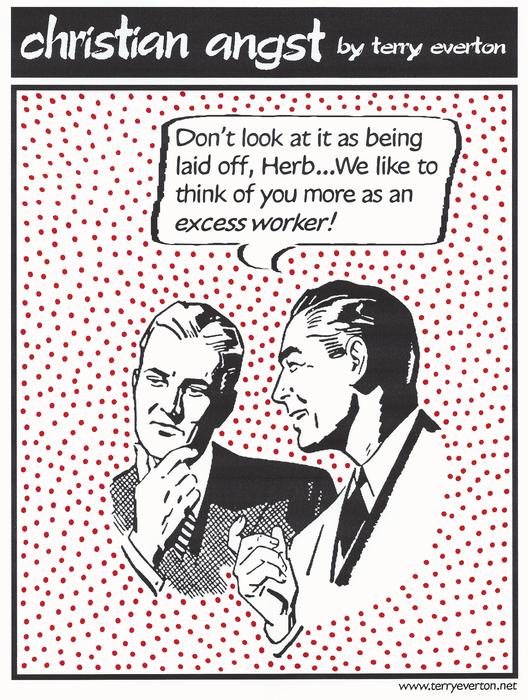
A new euphemism: "We have to synergize backward overflow."

Wednesday, September 7, 2011

Coaching Virtual Teams

A good manager is also a good coach. But what if your team is a virtual one, spread out in different cities or countries? A lot of leaders with virtual teams choose to ignore that part of managing and prefer to focus their precious time on their projects, not their people. It is definitely taking the easy way out, but when their companies don’t particularly reward efforts at employee development you can’t blame these managers much.

Being good leaders, we know this is short-sighted, especially when there is a dearth of good leadership which is only going to get worse as people switch organizations, opt out of corporate work, or retire.

Developing future leaders starts with being a great coach to them.  Building trust and respect is the foundation of coaching. I know your time is limited but adding a few minutes to your schedule should pay off when you don’t have to spend time onboarding a new hire after your employees quit for more enticing opportunities. Here are a few suggestions for developing trust and respect and for coaching those remote employees:

• Talk one-to-one via the telephone to each direct report periodically. Include a little “personal time” talk to find out what they did during the weekend, how their family is doing, and milestones for them and their kids. Write down their kids’ and spouses’ names and important facts like their hobbies or birthdays. Put the birthdays and other milestones into your calendar.

• Be sure and send a text or email message acknowledging those milestones when they come up in your calendar. Follow up with questions about events and people that are important to them. Your direct reports will be impressed that you remembered or cared. This is all about relationship-building.

• Listen carefully during conference calls and take notes. Listen to how your employees communicate and interact, ideas they may present, or priorities they focus on. Listen first of all for things you can reinforce with a little praise and appreciation. Listen second for things you can help them improve in order to be more successful. Respond immediately out loud on the call for the good stuff. Call them later for a ‘coaching to improve performance’ conversation for the other.

• Stay collaboratively influential with social media. Be sure your team has a Yammer or Sharepoint site, or even a Facebook page where you can share ideas and observations with each other. Besides messages about the projects your team is responsible for, this allows you an open forum for team coaching.

Studies have shown that 5:1 is the “magic ratio” for optimum relationships. That means in order to develop and maintain good relationships (whether personal or professional), there should be a minimum of 5 positive interactions to every negative one. That’s even more important to keep in mind when you can only communicate virtually. Just talking about business all the time is neutral, and not necessarily a “positive interaction”.

How to manage performance and coach employees to develop is a challenge when it’s face-to-face, much less virtually. Managers need to be even more vigilant and observant in order to detect those teachable moments and identify those coachable direct reports. But if you don’t want your people to jump ship at the next opportunity, you need to be the boss they want to work for. That means helping them be successful in their current work and coaching them on how to be ready to advance in their careers. No matter where they are.

How do you build trust and respect with your virtual team members?

Communicating with your remote team members can have unforeseen challenges.

The Playing for Change folks must be incredible at virtual teaming to come up with these amazing performances!

Wednesday, August 24, 2011

Your Department’s Reputation = You

Twenty years ago I worked at a company that was and still is known as one of Fortune Magazine’s 100 Best Companies to Work For. My department and most of the people I worked with were fun and supportive. We worked hard, had a chance to be innovative, and were appreciated for our efforts.

But one department that I had to work with on a regular basis was a nightmare for me. In fact, the department was so difficult to work with that it had acquired a nickname in the company - the “Estrogen Explosion”.  Needless to say, the top two or three people from the vice president on down were women who perpetuated the B-word. And I don’t mean boss.

I had many run-ins with these women and I often left our bi-weekly meetings feeling frustrated and put-down. My own boss, a very nice man, didn’t have a clue as to how to work with them effectively and so I didn’t receive any coaching on how to deal with their behavior.

I tried everything I could think of to improve the situation. I hosted appreciation events with both of our departments to strengthen working relationships. I tried holding my ground and talking sternly back to them when they got on my case. I tried letting their sarcasm and snide comments wash right over me without reacting. In the end, they “won” as I left the company, feeling exhausted and somewhat abused. My nice boss had left two years earlier and had been replaced by one not so understanding or supportive. Between him and the constant stress from working with the Estrogen Explosion, I needed a long break and I took it.

I was one more person who left a good job with a good company due to poor leadership.

Do you know what your department’s reputation is? Is your team known for being easy to get along with, knowledgeable, and high-performing? Or do other employees dread inter-departmental meetings with your people?

I have experienced both extremely collaborative departmental cultures and the opposite. Sometimes the team is on the whole very cooperative except for one odd person who is insecure or competitive or both. Leaders set the tone - they reinforce the values which become the culture of their areas. If they are competitive, secretive, and power-mongering, then their organization will tend to be the same. If they keep themselves and others accountable to a higher set of behaviors, then those will morph into the culture and reputation of not only their department, but will become their signature leadership qualities as well.

As one (and not the only one) of the casualties of the Estrogen Explosion, I observed first-hand the different leadership styles and their effects on the people around them. This experience was one of the catalysts for changing my career from international sales and marketing to a coach and consultant. So I did get something positive from that prolonged ‘learning experience’. And I pass my hard-earned wisdom on to anyone who needs it.

From my position now as a leadership coach and trainer, I know that there were things I could have done at the time had I known of them. I can see that my behavior style was a direct opposite of the vice-president’s and her manager’s. Had I known then what I know now about flexing my behavior style, I could have mitigated the confrontations to some extent. Roles, responsibilities, and expectations should have constantly been reviewed because there was overlap between our two departments that also contributed to the conflict. And, my nice boss also had a behavior style which was in conflict with theirs. If he had understood what I do now, he could have coached me on quite a few options to try in order to improve circumstances.

What values are you reinforcing? What behaviors do your employees see you employing, especially when circumstances are stressful? Are you keeping others accountable to high behavior standards or do you let them get away with (seemingly) minor transgressions as long as you get the results you want? What you say and do ends up affecting your entire organization, but most of all, it affects you and your direct reports. Find out what your department’s reputation is, and if you want to change it, it starts with you.

Testosterone Explosion?